


Dates:
February 24 - 26, 2027
(Wednesday to Friday)
Venue:
Entrepreneurship Development Institute of India,
Bhat, Gandhinagar – 382 428,
Gujarat, India
17th BIENNIAL CONFERENCE ON ENTREPRENEURSHIP
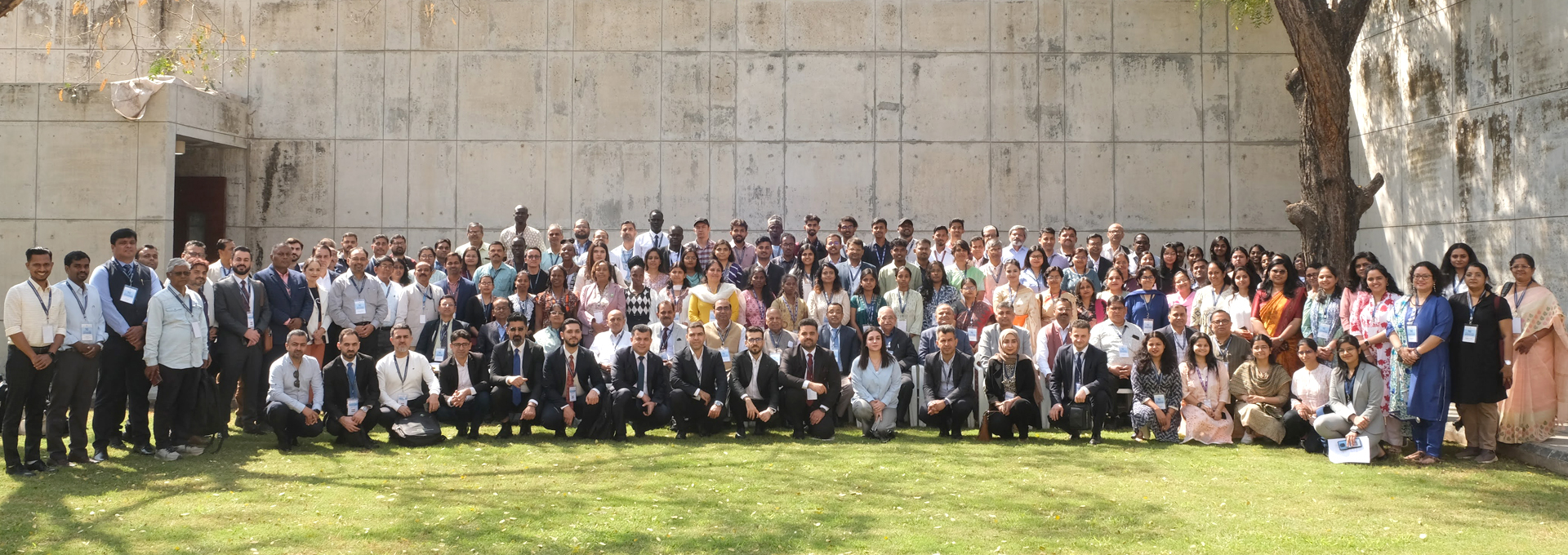
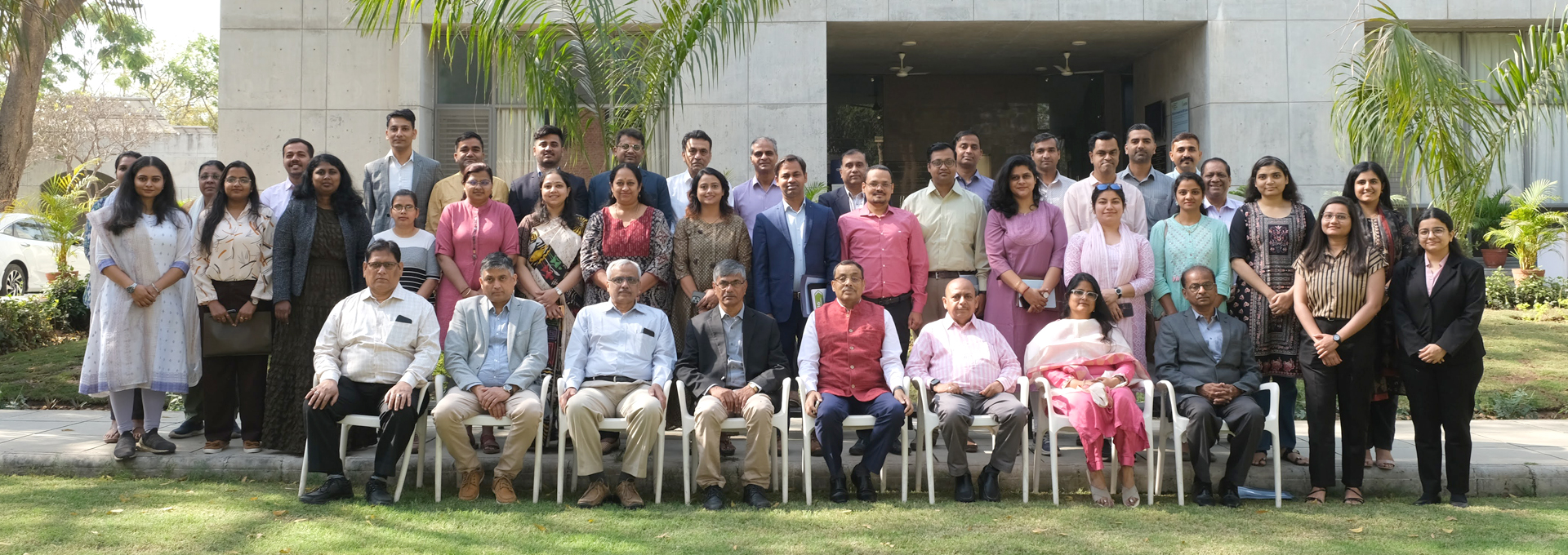
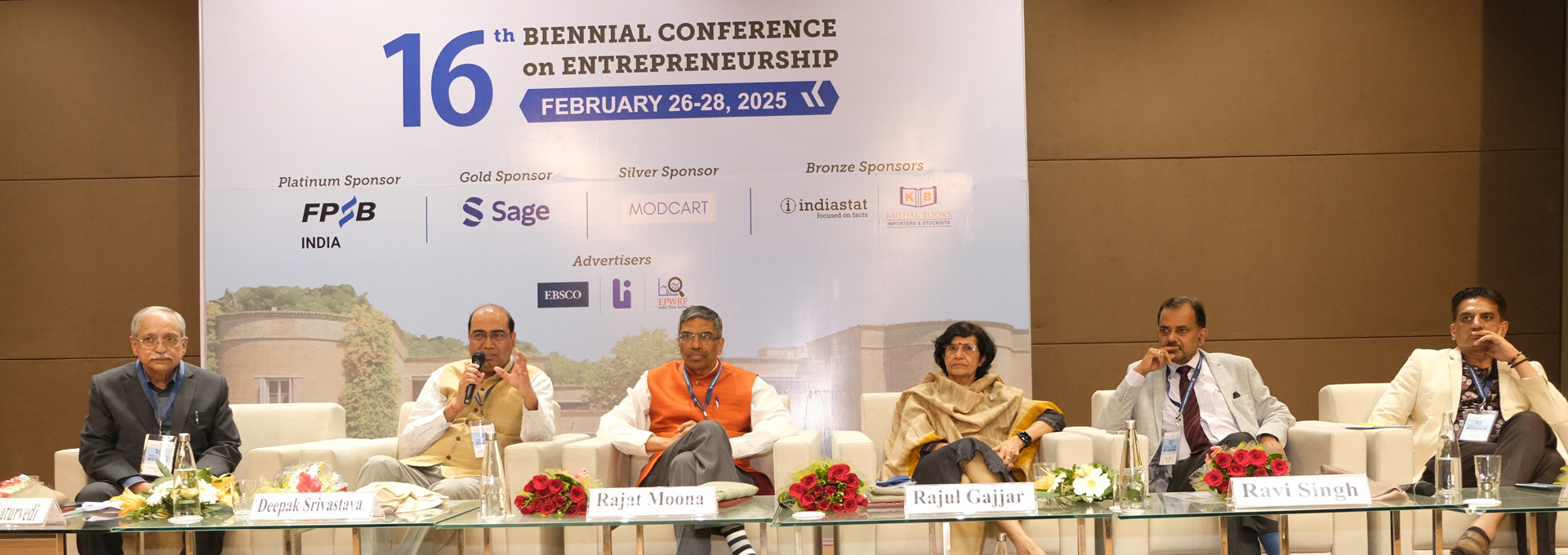
Entrepreneurship Development Institute of India (EDII) has been organizing Biennial Conferences on Entrepreneurship since 1994. These conferences provide a forum for researchers, educators, and practitioners to share their research findings and experiences in entrepreneurship development. Deliberations on contemporary issues of relevance and interest have opened up new avenues to advance entrepreneurship on a much broader scale. The conferences are organized under the aegis of the Centre for Research in Entrepreneurship Education and Development (CREED), setup by EDII. EDII has organized sixteen Biennial Conferences from 1994 to 2025.
In line with the sixteen biennial conferences held over the past 32 years, the 17th Biennial Conference on Entrepreneurship continues to serve as an established forum for researchers, educators, and practitioners to share their ideas and research findings with other researchers, professionals and thinkers in the field. This conference provides an opportunity to exchange feedback and refine their research pursuits. Researchers are invited to contribute papers and reports that explore and expand upon the field of entrepreneurship theory and practice.
🕒 Important Dates
Highlights of Sixteen Biennial Conferences
Conference Themes and Focus Areas
The 17th Biennial Conference on Entrepreneurship invites research contributions that advance theory and practice across diverse contexts. We welcome submissions on the following themes:
Policy, Governance, Institutions, Culture, Inclusion, Social Entrepreneurship
Theory, Practice, Startups, Innovation, Digital & Tech Entrepreneurship
Mindset, Decision-Making, Identity, Leadership, HRM, Work Behaviour, Teams, Wellbeing
Pedagogy, Skill Development, Training Models, Ecosystems for Learning
Environmental, Social, Governance, Ethics, Impact Entrepreneurship
Family Firms, Succession, Governance, Emerging-Market C
Entrepreneurship Policy, Governance, and Ecosystems
This theme explores the institutional frameworks, policy mechanisms, and ecosystem dynamics that enable and constrain entrepreneurial activity. We invite research examining how governance structures, regulatory environments, and ecosystem orchestration influence venture creation and growth across sectors and geographies.
Topics include, but are not limited to:
- Entrepreneurship Policy and Governance
- Sectoral Ecosystems and Entrepreneurship: Agriculture, Holistic Health, Education, Green Economy, etc.
- Focus on MSMEs: Competitiveness, Growth, and Sustainability
- Public-Private Partnerships and Ecosystem Development
- Regional Innovation Systems and Cluster Dynamics
Entrepreneurship Theory, Practice, and New Venture Development
This theme focuses on foundational and emerging theories of entrepreneurship alongside the practical realities of venture creation, growth, and scaling. We seek research that advances our understanding of entrepreneurial processes from ideation to established enterprise across diverse contexts.
Topics include, but are not limited to:
- Start-ups, Incubators, Accelerators, and New Business Development
- Corporate Entrepreneurship and Intrapreneurship
- Crisis Entrepreneurship and Recovery
- Entrepreneurial Opportunity Recognition
- Business Model Innovation and Pivoting Strategies
- Venture Scaling, Growth Strategies, and Exit Mechanisms
Innovation, Technology, and Digital Entrepreneurship
This theme examines how technological advancements and innovation processes are creating new entrepreneurial opportunities and transforming existing practices. We welcome research exploring digital transformation, emerging technologies, and their implications for venture creation and growth.
Topics include, but are not limited to:
- Innovation, Emerging Technologies, Appropriate Technologies, and Entrepreneurship for Achieving Sustainable Development Goals
- Technology Entrepreneurship, Digital Entrepreneurship, and Artificial Intelligence
- Digital Transformation and Entrepreneurship
- Platform-based Entrepreneurship and Gig Economy
- Blockchain, Web3, and Decentralized Business Models
Entrepreneurship Education and Capability Development
This theme invites research on how entrepreneurial competencies, mindsets, and capabilities are developed, nurtured, and sustained. We seek contributions examining pedagogical approaches, learning mechanisms, and capacity-building initiatives across formal and informal educational settings.
Topics include, but are not limited to:
- Entrepreneurship Education
- Academic Entrepreneurship and the Craft of Teaching
- Capacity Development and Lifelong Learning
- Entrepreneurial Mindset Development
- Experiential Learning and Action-based Pedagogies
- Entrepreneurship Curriculum Design and Assessment Methods
Cognitive, Behavioral, and Psychological Aspects of Entrepreneurship
This theme explores the individual-level factors that drive entrepreneurial action, decision-making, and outcomes. We welcome research examining the psychological, cognitive, and behavioral dimensions of entrepreneurial phenomena at individual and team levels.
Topics include, but are not limited to:
- Cognitive and Behavioral Aspects of Entrepreneurship
- Entrepreneurial Passion, Motivation, and Self-efficacy
- Risk Perception, Decision-making Under Uncertainty, and Heuristics
- Entrepreneurial Identity, Well-being, and Mental Health
- Team Dynamics, Conflict Resolution, and Founder Relationships
Inclusive Entrepreneurship and Social Innovation
This theme focuses on entrepreneurship that promotes inclusive economic participation and addresses pressing social challenges. We invite research examining ventures led by underrepresented groups and those creating both economic and social value in diverse contexts.
Topics include, but are not limited to:
- Women Entrepreneurship
- Inclusive Entrepreneurship
- Social Innovations and Entrepreneurship
- Culture, Tradition, and Value-based Entrepreneurship
- Youth Entrepreneurship and Generational Perspectives
- Minority, Migrant, and Diaspora Entrepreneurship
Sustainability, ESG, and Responsible Entrepreneurship
This theme examines entrepreneurial approaches to environmental and social challenges. We seek research exploring how ventures integrate sustainability principles, environmental responsibility, and governance considerations into their strategies and operations while pursuing the Sustainable Development Goals.
- Topics include, but are not limited to:
- Environmental, Social and Governance (ESG) and Entrepreneurialism
- Sustainability and Green Entrepreneurship
- Circular Economy and Sustainable Business Models
- Climate Tech, Clean Energy, and Environmental Innovation
- Social Responsibility, Ethical Entrepreneurship, and Stakeholder Engagement
- Impact Investing, ESG Metrics, and Sustainable Finance
Entrepreneurship, Society, and Cultural Context
This theme explores the broader societal and cultural dimensions of entrepreneurship and how contextual factors shape entrepreneurial activity and outcomes. We welcome research examining the interplay between entrepreneurship, economic development, social structures, and cultural values.
Topics include, but are not limited to:
- Entrepreneurship and Society
- Global Entrepreneurship Trends
- Institutional Theory and Entrepreneurship in Emerging Markets
- Cultural Values, National Culture, and Entrepreneurial Orientation
- Family Business, Succession, and Multi-generational Entrepreneurship
- Rural and Urban Entrepreneurship: Comparative Perspectives
Family Business and Ventures
This theme focuses on understanding the distinct nature of family-owned enterprises and the entrepreneurial activities that emerge within family contexts. It examines how family relationships, values, ownership structures, and long-term orientations influence business decisions, innovation, governance, and continuity across generations. The theme encourages research that explores both the strengths and challenges of family involvement in business, including succession, conflict management, leadership transition, and the balance between family and professional management.
Topics include, but are not limited to:
- Family Business Governance, Ownership, and Control
- Succession Planning, Next-generation Leadership, and Intergenerational Transition
- Entrepreneurial Families and Family Firm Entrepreneurship
- Family Firm Innovation, Strategic Renewal, and Transformation
- Socioemotional Wealth (SEW) and Family Firm Decision-making
Emerging Perspectives and Cross-Cutting Research
This theme welcomes high-quality research that does not align with the themes outlined above but makes significant contributions to entrepreneurship scholarship and practice. We encourage innovative, interdisciplinary, and boundary-spanning research that explores new frontiers or integrates multiple perspectives.
Topics include, but are not limited to:
- Novel theoretical frameworks and methodological innovations
- Interdisciplinary approaches bridging entrepreneurship with other fields
- Emerging phenomena not captured in existing themes
- Comparative and cross-cultural studies with unique perspectives
- Meta-analyses, systematic reviews, and bibliometric studies
- Research agenda setting and future directions
- Replication studies and methodological refinements
- Any other research advancing entrepreneurship knowledge
Leadership, HR, and Work Behaviour in Entrepreneurial Ecosystems
This theme considers the role of leadership, human resource practices, and organizational behaviour in shaping entrepreneurial outcomes within MSMEs and broader entrepreneurial ecosystems. We invite research that explores how leadership approaches, people management systems, and work behaviours influence venture emergence, performance, adaptability, and sustainability in resource-constrained and dynamic environments. The theme encourages multi-level perspectives, linking individual and team behaviours with organizational and ecosystem-level outcomes across sectors and regions.
Topics include, but are not limited to:
- Entrepreneurial Leadership in MSMEs
- Human Resource Practices for Startups and Small Firms
- Organizational Behaviour in Entrepreneurial Contexts (engagement, commitment, motivation, citizenship behaviour)
- Talent Management and Skill Development in Entrepreneurial Ecosystems
- HR processes and Leadership for Innovation, Digital Transformation, and Change Readiness in Small Firms
Submission Guidelines
Authors are invited to submit full papers prepared according to the below submission guidelines. Submissions should present original research, be properly structured, and adhere to the specified word limit and referencing style. All papers will undergo a peer-review process.
📄 Formatting
- Microsoft Word format
- Language: English
- Length: 5,000 to 8,000 words (incl. all content)
👤 Author Details
- All authors listed in correct order
- Name, Designation, Affiliation, Address, Email
- Biographical sketch (50 words)
🧱 Paper Structure
- Title page with author details
- Structured abstract & keywords (up to six)
- Main text, references & biographies
🔤 Font & Formatting
- Times New Roman
- Body: 12 pt, single-spaced
- Headings: Bold 13 pt
- Sub-headings: Italic 12 pt
📊 Figures & Tables
- Figures: Caption below, numbered
- Tables: Title above, numbered
- Captions italicized (11 pt)
- Sequential numbering mandatory
- Source citation required
📝 Extended Abstract
- Background & research problem
- Objectives & methodology
- Findings & implications
- Limitations & originality
- 800–1000 words (keywords excluded)
- 4–6 keywords
📚 Reference Style
- APA 6th or 7th Edition
- APA Reference Examples
🔍 Review Process
- Blind peer review
- Plagiarism check using Turnitin
- Generative AI usage must be declared
- Submitting author responsible for approvals
- No legal liability for disputes
Publication
Abstracts of accepted papers will be published by a reputed publisher with ISBN.
Authors are encouraged to submit full articles to any journal of their choice, including EDII's The Journal of Entrepreneurship.
Collaboration with Journals
(To be announced soon)
Post Conference Paper Development workshop with collaborated Journal
Special Offer for Journal of Entrepreneurship (JoE) Subscription
Started in 1992 and published by Sage Publications, The Journal of Entrepreneurship (JoE) is a prestigious quarterly journal released every February, May, August, and November, with an additional annual special issue on emerging themes introduced in August 2022. Available both in print and electronically via Sage Journals Online (http://joe.sagepub.com), the journal is indexed in the Australian Business Deans Council (ABDC), Scopus, and all other leading databases, currently maintaining an H-index of 34.
- A special 20% discount on the subscription is available exclusively for conference delegates.
🎉 Conference Special Discount
Enjoy 20% off on all the JoE subscription categories listed below!
Subscription Category India South Asia Individual Subscription – Print Only ₹6,430.00 £93.00 Institutional Subscription – E-access ₹9,505.00 £100.00 Institutional Print subscription incl. free online access ₹11,180.00 £145.00 Individual – Single Print Issue ₹1,770.00 £26.00 Institutional – Single Print Issue ₹3,070.00 £40.00
Offer for Global Entrepreneurship Monitor India Data
Conference delegates may also gain valuable opportunities for collaborative research using data from the Global Entrepreneurship Monitor (GEM), the world’s largest and most credible annual study of entrepreneurial dynamics. Conceived in 1999, GEM is globally venerated for its extensive research coverage, and with the Indian entrepreneurial ecosystem strengthening daily, the GEM-India Consortium (https://www.gemindiaconsortium.org) plays a vital role in probing the country's rapidly evolving entrepreneurial landscape. Led by EDII, the India chapter is currently expanding its reach by involving regional and state-level institutions to ensure a comprehensive, multi-dimensional analysis of Indian entrepreneurship.
Conference Fee
Registration Fee
- Indian delegates: ₹ 11,000/-
- Foreign delegates: US$ 350/-
100% Registration Fee Waiver
For Ph.D./FPM scholars, upon application not in employment and not supported by their institutes/universities. A certificate from the Research Guide or Head of Department (HOD) must be submitted as proof.
- Only participating delegates are provided accommodation. Non-participating guests (including spouse) shall pay ₹ 1,200/- (Indian guests) and US$ 60/- (International guests) per day separately.
- Authors/delegates who wish to occupy accommodation during pre- and post-conference days shall pay ₹ 1,200/- (Indian delegates) and US$ 60/- (International delegates) per day separately.
- GST @ 18% will be charged extra on all payments as per Indian Government rules.
Conference Structure
I. Academic & Research Excellence
This segment focuses on advancing the frontiers of entrepreneurial knowledge through rigorous scholarly exchange.
- Doctoral Colloquium: Mentorship and developmental feedback for emerging researchers.
- Technical Sessions & Poster Presentations: Peer-reviewed tracks showcasing cutting-edge research.
- Thematic Workshops: Specialized sessions on high-impact areas of entrepreneurship.
II. Strategic Leadership & Policy Dialogue
Bringing together the architects of higher education and policy to shape the future of the ecosystem.
- Vice Chancellors’ & Directors’ Conclave: A high-level forum for institutional heads and academic leaders.
- Invited Addresses: Keynotes from globally renowned scholars and industry stalwarts.
- Panel Discussions & Open House: Interactive platforms for deliberating on contemporary global challenges.
III. Evidence-Based Ecosystem Insights
Highlighting EDII’s role in global research and industry partnership.
- GEM India Report Presentation: An exclusive deep dive into the latest findings from the Global Entrepreneurship Monitor.
- Sponsor & Industry Briefings: Innovative presentations on the latest trends in the entrepreneurial support system.
IV. Networking, Culture & Ceremonies
Building a community of practice through shared experiences and cultural immersion.
- Inaugural & Valedictory Functions: The ceremonial bookends of the biennial event.
- Conversations & Cuisine: An “Entrepreneurial Evening” dedicated to networking over fine food.
- Cultural Programme: A curated evening celebrating India’s rich artistic heritage.
3rd Doctoral Colloquium
The EDII 3rd Doctoral Colloquium is an avenue for doctoral students of EDII and other institutes/universities to present and discuss their research ideas, proposals and empirical work. It is a platform for the generation exchange of new knowledge and ideas related to diverse aspects of Entrepreneurship, including Entrepreneurship Theory, Entrepreneurship Policy, Entrepreneurship Education & Capacity Building, Manifestations of Entrepreneurship, Entrepreneurship Context, MSME Entrepreneurship, Functional Areas of Entrepreneurship and developmental studies. The colloquium will be open to researchers who intend to showcase and discuss their research ideas and work in-progress, with peers, experts and other research scholars.
Three Best Doctoral Work Awards: research support of ₹ 50,000/- (Rupees Fifty Thousands only) for three best doctoral works, which the Doctoral Scholars can claim within the next two years upon request. The candidate must acknowledge this funding and EDII in any publication produced using this seed capital.
The Doctoral Colloquium will be held on February 23, 2027 (Tuesday).
Conference Host
Conference Host

Dr. Sunil Shukla
Ahmedabad, India
Conference Secretariat
Conference Chair
Conference Coordinator
Advisory Board
Confirmation awaited
Organizing Committee
Dr. Satya Ranjan Acharya
Professor & Director, Department of Entrepreneurship Education
EDII, AhmedabadDr. Amit Kumar Dwivedi
Professor & Director, Department of Government Projects
EDII, AhmedabadDr. Pankaj Bharti
Associate Professor and In-Charge – Western Regional Office
EDII, AhmedabadDr. Abdul Razak
Associate Faculty
EDII, AhmedabadDr. Suman Kumar Das
Assistant Professor
EDII, AhmedabadDr. Sonali Narbariya
Assistant Professor
EDII, AhmedabadDr. Tiyasa Mishra
Academic Associate
EDII, AhmedabadDr. Rajat Sharma
Entrepreneurship Expert
EDII, AhmedabadMr. Ganpathi Batthini
In-Charge – Library and Information Centre, & Coordinator, CREED
EDII, AhmedabadPost-Conference Sightseeing (Optional)
 The Statue of Unity, the world’s tallest statue (182 meters), stands as a tribute to Sardar Vallabhbhai Patel, the Iron Man of India. Located in Gujarat, it symbolizes national unity, leadership, and integrity, and offers visitors a memorable cultural and historical experience amidst scenic surroundings.
As part of the post-conference, EDII is organizing an optional sightseeing tour to the Statue of Unity on Saturday, 27 February 2027. Interested participants may join this tour by paying an additional transportation fee of ₹ 750/-, food and entry tickets will be borne by the participants. This visit offers a unique opportunity to experience one of India’s most iconic national landmarks.